This week has been great, even though we had midterms for two of our classes this week: Hebrew and Juddaism. I got A's on both. We still have one more midterm for our Palestine class this coming week. Some of the highlights from this week include an awesome dance party last night at the Center. We all had a really great time just being goofy and dancing in the student lounge until about 11 last night when security came to shut the party down. Another really fun thing we did was also yesterday. We had a humanitarian service activity where we made school supply kits to donate to local schools around here. We put notebooks, pencils, colored pencils, a ruler, erasers, scissors, and a pencil sharpener in each one. We had two big assembly lines going. I helped stuff notebooks in the kits. We had music playing, so we were all singing and dancing while we were making the kits. It was SO fun! And we made over 2500 kits in just two hours. The Jerusalem Center tries to do a lot of humanitarian work like that in order to reach out to the community. They really put a huge emphasis on that since it's really the only kind of missionary work the church can do around here. One of the three service couples is in charge of all of the humanitarian work that they try to do from the Jerusalem Center. Also as part of their outreach to the community here, they put on free concerts of professional musicians once or twice a week, and I got to help usher one of them on Thursday night. I also got to go to the concert since it wasn't sold out. It was a jazz concert that some famous Israeli musicians, and it was great! They played things like "The Way You Look Tonight," "Ol' Man River," and "Yesterdays." I really loved it! And it was fun to practice some Hebrew and welcome people into the concert. (Okay all I really did was say Shalom, which means welcome and Erev Tov, which means good evening.) So those have been some of the best moments from this week.
On Sunday, I went to the mall in West Jerusalem. It was about a twenty-minute drive away in a taxi. I went with my roommates Rachel Singer and Melanie Bunker, and another girl Summer Perez came with us. It was extremely western. It was the closest I've felt to being back in the States since I got here. We went clothes shopping at H&M and Zara. I didn't get anything because I didn't really see anything I wanted, but it was fun to shop around and look at clothes still. The only thing that made it not seem like an American mall was that all of the signs were in Hebrew, and there was a grocery store on the bottom floor of the mall. I thought that was weird, but it would be nice to have that in the States so you could really get all of your shopping done in one place. After we got back to the Center, I spent the afternoon writing a report for my Ancient Near East class on the place Azekah that we would be visiting the next day. So that was what I did for my free day this last week.
On Monday, we went on a really fun, but very long field trip. We visited the geographical region of Israel call the Shephelah. (Pronounced Shfaylah). It is west of the Juddean Hills where Jerusalem is. It is the lower hills in between the Juddean Hills and the coastal plain, known as Philisita in ancient times. So in the Shephelah there are five main valleys. These valleys give passage to the Juddean Hills, so they were very important militarily in ancient times. We visited four of the valleys on our field trip.
First we visited the Soreq valley and went to the ruins of Beth-Shemesh. This is around the area where Samson was from. We talked a lot about him there. The thing that has stuck out to me as I've been reading the Old Testament lately is that anyone can mess up and give into Satan. Even the people that you think are the most righteous. The stories of Samson, Saul, David, and Solomon are all examples of people were extremely righteous and favored of the Lord, but they all chose eventually to turn away from the Lord because they were more worried about worldly things or about what people thought. And it has become really apparent to me that none of them just went bad overnight. It was a very slow process for them to go from worshiping God to worshiping idols, or whatever sin they committed. We can be deceived and fall away "lie upon lie, decept upon decept" or we can choose to grow "line upon line, precept upon precept." "By small and simple things are great things brought to pass." No scripture in the Book of Mormon has ever rang so clear as this one in Alma has for me this last week. Anyone can fall, but anyone can also succeed, as long as they do what the Lord commands.
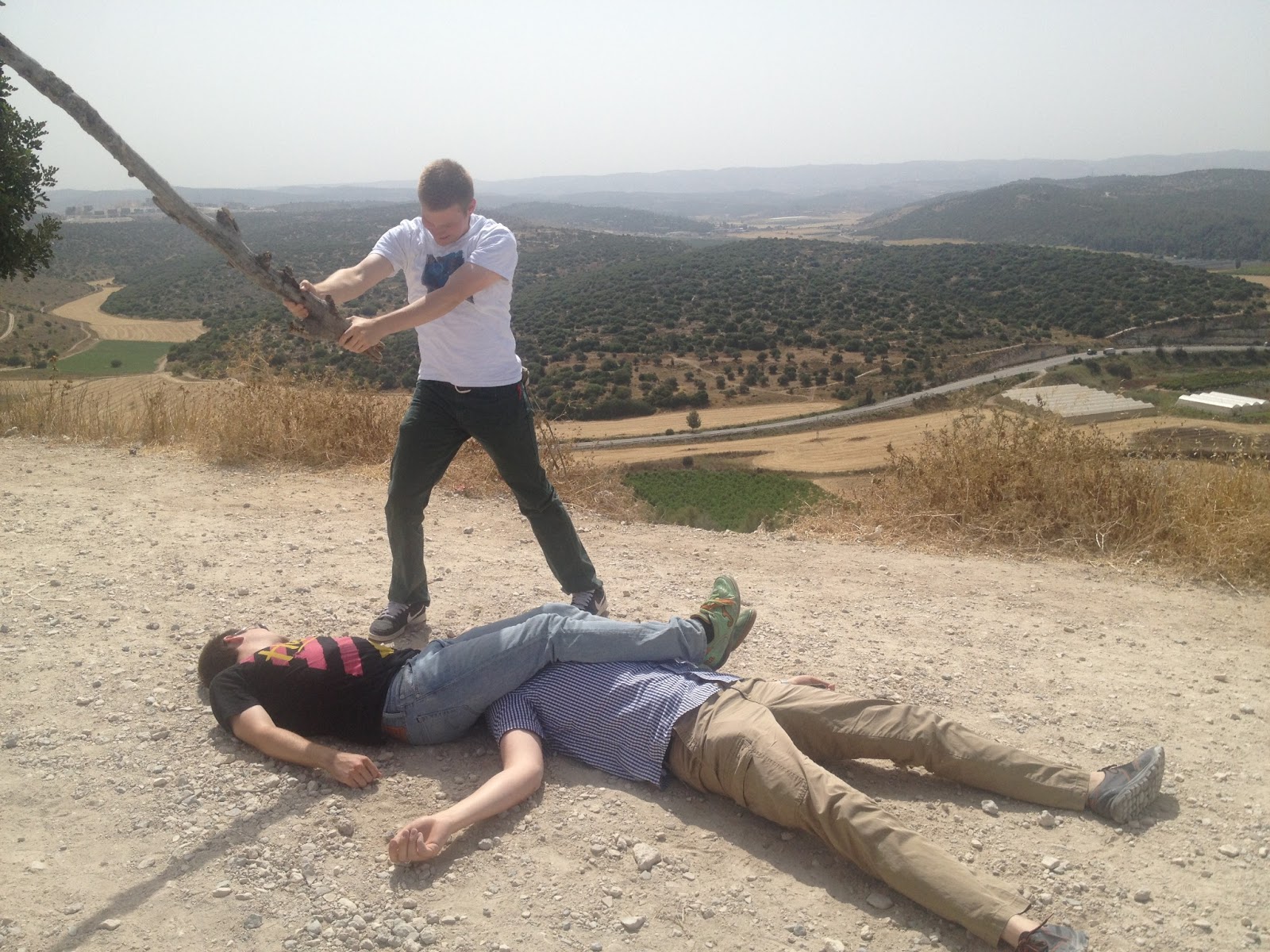
After the Soreq Valley, we traveled to the Elah Valley and visited the ruins of Azekah, which was a military fortress in the time of David and Saul. The fortress of Azekah is a great military stronghold because it is surrounded by valleys on three sides. There is a ton of excavation being done on it right now, so we didn't get to see much as far as ruins go, but it was really neat to look out over the valley and think about how much faith it must have taken David to go down there and face Goliath. David had great faith. The valley is really large, and being alone with a giant in there would have been very intimidating. The Lord really blessed David, and it just made it that much more sad to know that he threw a lot of those blessings away by lying with Bathsheba and killing Uriah in order to have her as his wife.
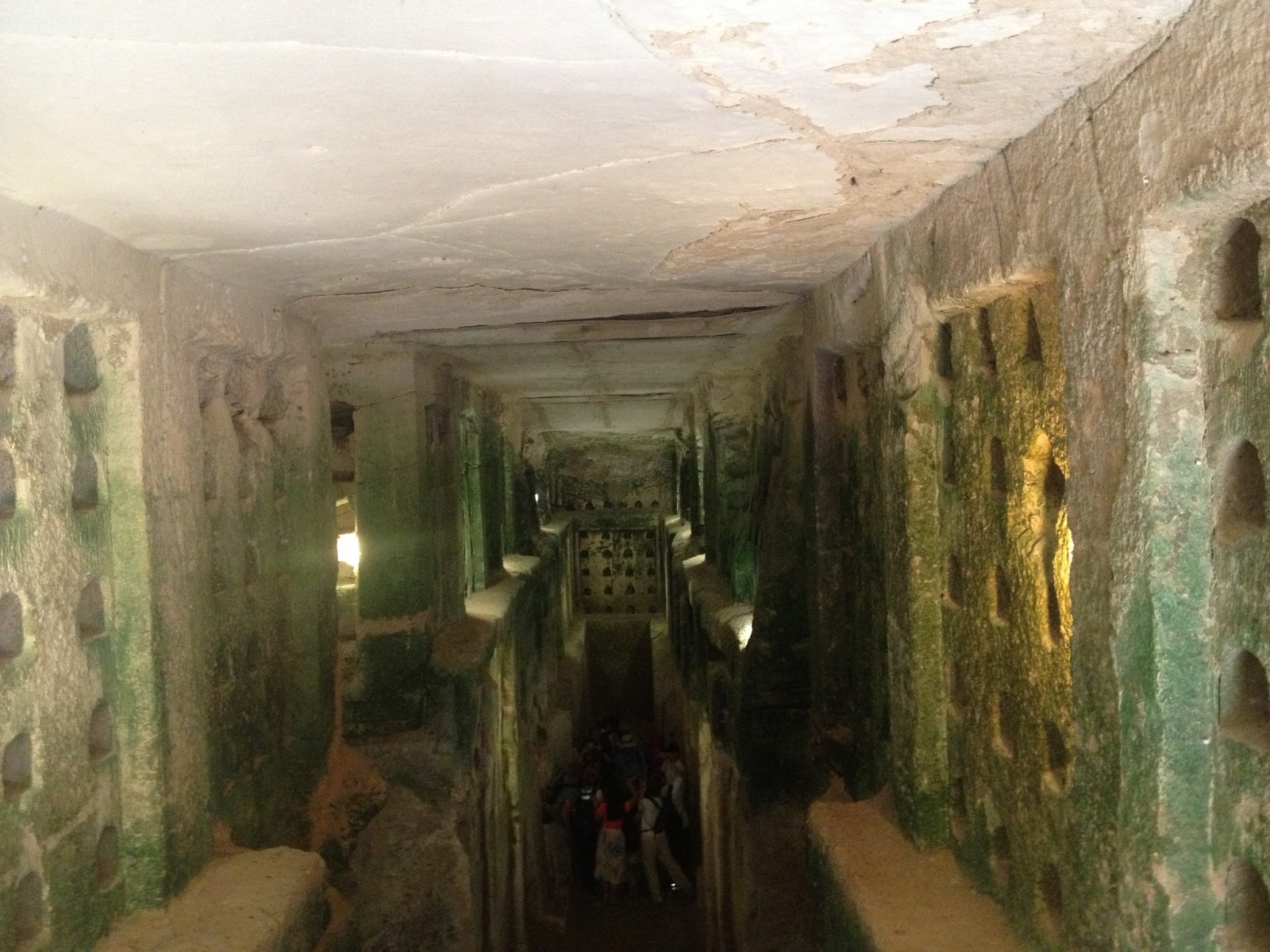
After the Elah Valley, we visted some caves in the Guvrim Valley that are known as the bell caves. They are caves that were formed in order to mine the limestone underneath the surface of the land. They would cut a hole in the ground and just start mining out the limestone for building until the cave couldn't get any bigger without collapsing in on itself. (See the diagram in the pictures.) These caves had great acoustics. So we sang a lot of hymns in them. It sounded like a church when we sang in the caves. Also in the Guvrim Valley, we visited a dovecote, which was an underground dove farm basically. There were tons of holes in the walls where they would house each dove. They used the doves for food and sacrifices. They kept them underground because it was harder for the doves to escape and because it is much cooler underground. We also visited an olive press and talked about the process of making olive oil. It was a very spiritual experience because it we talked a lot about the atonement. Olive oil was primarily used as a light source, so these olive presses were extremely important so that people could have oil in order to light their lamps. We talked about how Christ is the light of the world and how vital the atonement is to us, just like olive oil used to be so that people could see. I thought a lot about how in my last year of seminary, Brother Skalski gave us drops of oil for each time we read the scriptures. That was one of the best object lessons I've ever had in my life. It was a slow process, but eventually we had enough oil by the end of the year to light a lamp. I love how the atonement compares to this light source that we receive from the savior. The oil also reminded me of the parable of the ten virgins and how we need to be ready for the "coming of the bridegroom" like it tells us in D&C 33:17 by having our "lamps trimmed and burning." To know that we have taken full advantage of the atonement and are ready for the coming of the Savior is so important. This was a wonderful experience to visit the olive press and talk about the Savior and the light He brings us. We also took a quick trip to some underground tombs in the Guvrim Valley after this, which were interesting to look at.
After this we visited the Lachish Valley and saw the stronghold ruins of Lachish. (My camera died when we got there, so I didn't get any pictures of it.) But basically it was the second largest city in Israel after Jerusalem at the time of Lehi. It was the second to last city to fall into the hands of the Babylonians when they took the Israelites into captivity in 586 BC. (Think of the story of Daniel and the Lion's Den). It was on a large hill, and the fortress looked very hard to breach. The Assyrians also tried to take this city in about 700 BC, and they eventually succeeded after a long siege under the direction of King Sennacherib. There isn't really anything mentioned about this place in the scriptures, but it is an important historic sight in the land of Judah in modern-day Israel. After Lachish, we went over to a little ravine on the side of the road and threw rocks with slingshots at the side of one of the hills there so we could be like David. I spent the first 15 minutes figuring out how to sling a rock, but then I finally got good at it. It was really fun, and luckily no one got hurt. Haha! Our teachers were pretty nervous about setting us loose to go sling rocks around each other. But it was fine. I really appreciate the story of David and Goliath even more because aiming a slingshot isn't that easy.
That's all I have for this week. Tomorrow we are going to visit the Holocaust museum in Jerusalem for our weekly field trip called Yad Vashem. The name Yad Vashem (Hebrew) comes from a passage in Isaiah where he talks about a name and a memorial for the dead that have no ancestors to remember them. I think it will be a very good, but sobering experience. I am looking forward to it.






A picture of my roommates and me after church today in the Jerusalem Center gardens. Left to right: Kjersten Ness, Rachel Singer, Melanie Bunker, and me.


